# Map Custom Style
Last updated:
October 18, 2026
\| 2 minutes read
* UIKit
* SwiftUI
This example demonstrates how to apply a custom map style in a UIKit application. A custom map style can be created in our [Map Studio](https://developer.magiclane.com/docs/guides/map-studio/).
Check the full implementation on [GitHub](https://github.com/magiclane/magiclane-maps-sdk-examples-for-ios/tree/main/UIKit/3DScene/MapViewCustomStyle).
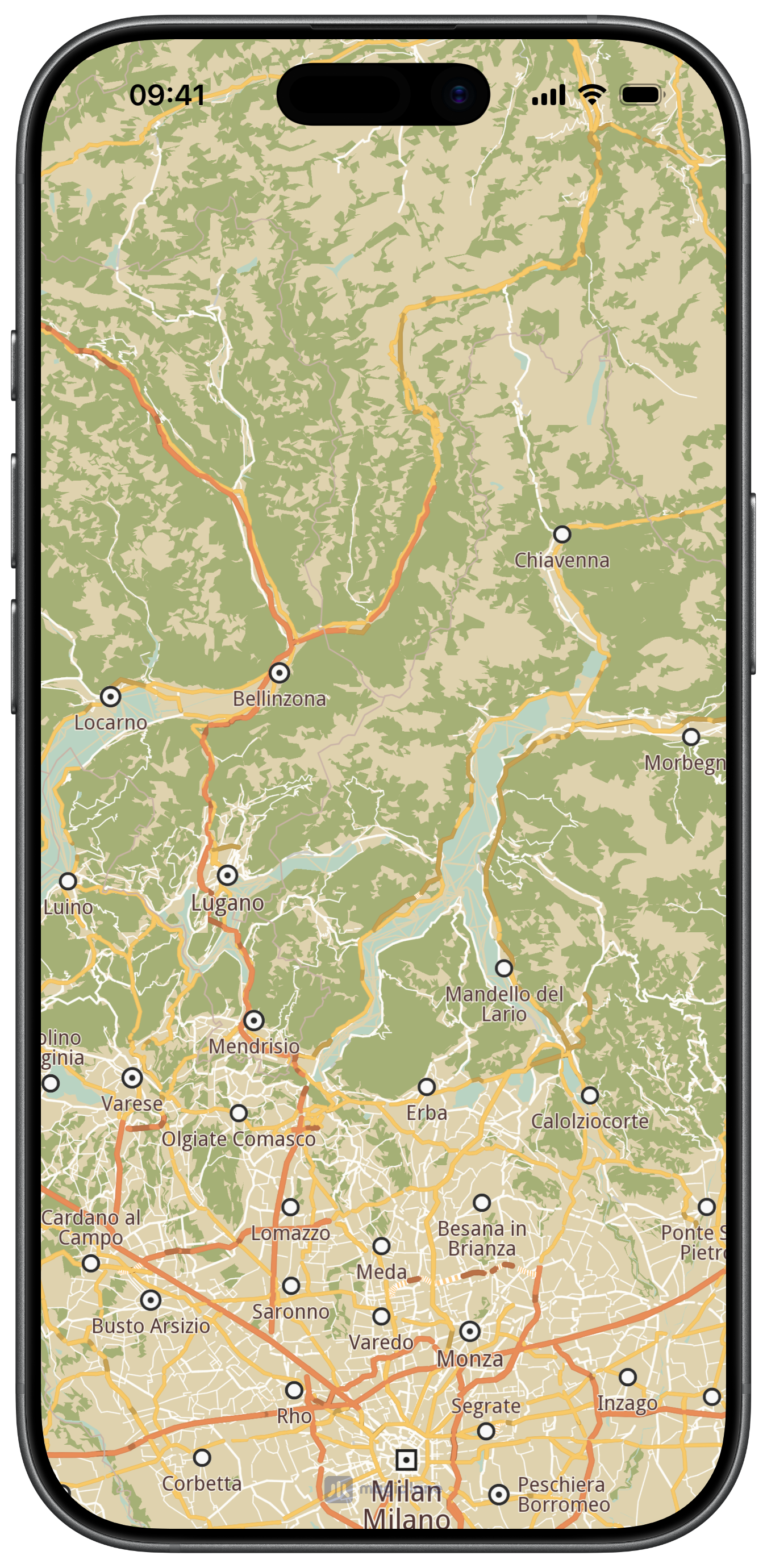
**Map view with custom style**
### Map Display and applying the Style[](#map-display-and-applying-the-style "Direct link to Map Display and applying the Style")
The following code outlines the main view, which displays the map and applies a custom style from the app's resources:
ViewController.swift[View on GitHub](https://github.com/magiclane/magiclane-maps-sdk-examples-for-ios/tree/main/UIKit/3DScene/MapViewCustomStyle/MapViewCustomStyle/ViewController.swift)
```swift
class ViewController: UIViewController {
var mapViewController: MapViewController?
override func viewDidLoad() {
super.viewDidLoad()
if let navigationController = self.navigationController {
let appearance = navigationController.navigationBar.standardAppearance
navigationController.navigationBar.scrollEdgeAppearance = appearance
}
self.createMapView()
self.mapViewController!.hideCompass()
self.setCustomStyle()
}
override func viewWillAppear(_ animated: Bool) {
super.viewWillAppear(animated)
self.mapViewController!.startRender()
}
// MARK: - Map View
func createMapView() {
self.mapViewController = MapViewController.init()
self.mapViewController!.view.backgroundColor = UIColor.systemBackground
self.addChild(self.mapViewController!)
self.view.addSubview(self.mapViewController!.view)
self.mapViewController!.didMove(toParent: self)
self.mapViewController?.view.translatesAutoresizingMaskIntoConstraints = false
NSLayoutConstraint.activate([
self.mapViewController!.view.topAnchor.constraint(equalTo: self.view.topAnchor, constant: 0),
self.mapViewController!.view.leadingAnchor.constraint(equalTo: self.view.leadingAnchor, constant: 0),
self.mapViewController!.view.bottomAnchor.constraint(equalTo: self.view.bottomAnchor, constant: -0),
self.mapViewController!.view.trailingAnchor.constraint(equalTo: self.view.trailingAnchor, constant: -0)
])
}
func setCustomStyle() {
if let url = Bundle.main.url(forResource: "Basic1Oldtime", withExtension: "style") {
if let data = NSData.init(contentsOf: url) as Data? {
self.mapViewController!.applyStyle(withStyleBuffer: data, smoothTransition: false)
}
}
}
}
```
This example demonstrates how to apply a custom map style in a SwiftUI application. A custom map style can be created in our [Map Studio](https://developer.magiclane.com/docs/guides/map-studio/).
Check the full implementation on [GitHub](https://github.com/magiclane/magiclane-maps-sdk-examples-for-ios/tree/main/SwiftUI/3DScene/MapCustomStyle).
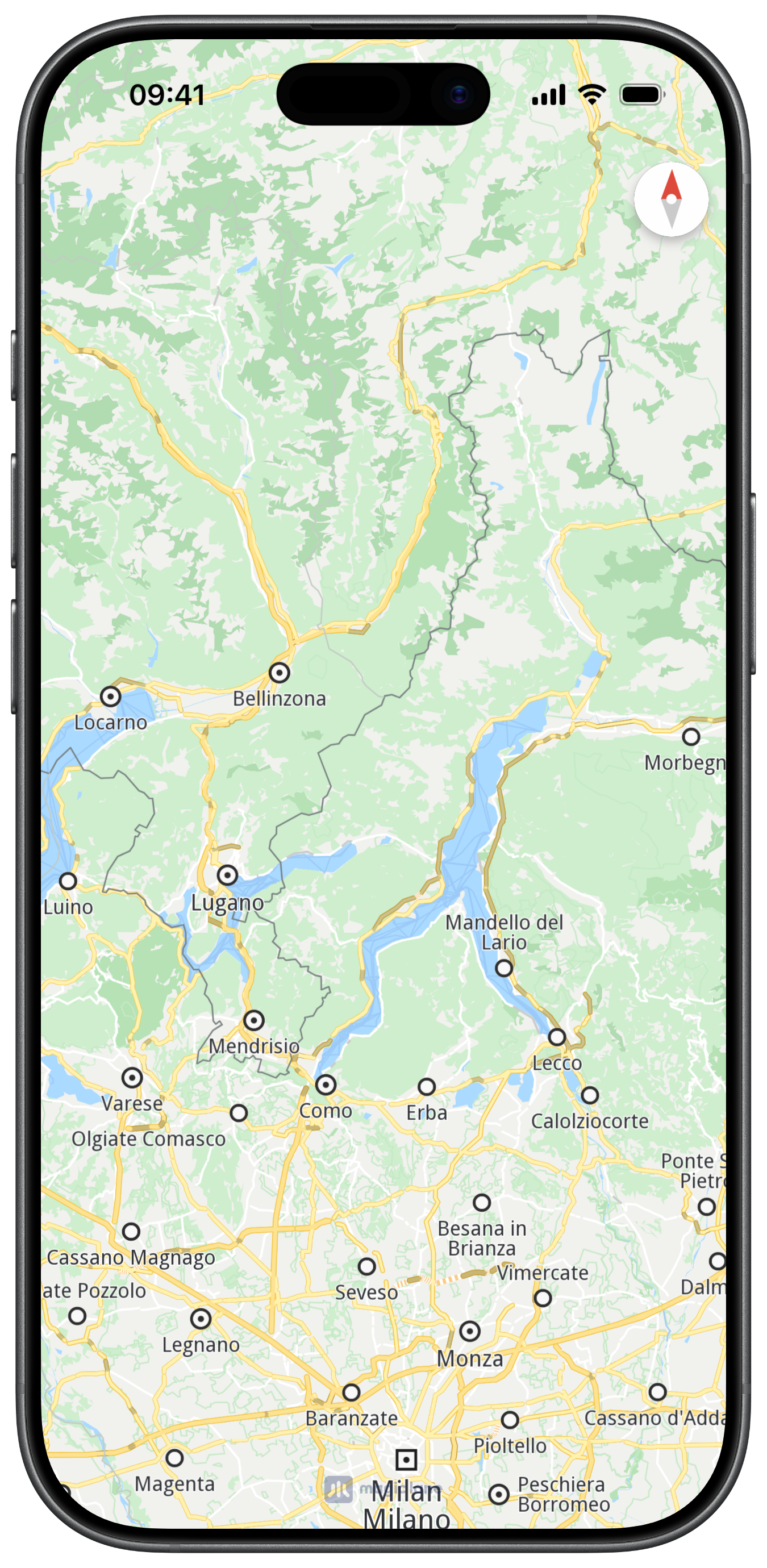
**Map view with custom style**
### Map Display and applying the Style[](#map-display-and-applying-the-style-1 "Direct link to Map Display and applying the Style")
The following code outlines the main view, which displays the map and applies a custom style from the app's resources:
ContentView\.swift[View on GitHub](https://github.com/magiclane/magiclane-maps-sdk-examples-for-ios/tree/main/SwiftUI/3DScene/MapCustomStyle/MapCustomStyle/ContentView.swift)
```swift
struct ContentView: View {
var body: some View {
MapReader { proxy in
MapBase()
.onAppear {
applyCustomMapStyle(proxy)
}
.ignoresSafeArea()
}
}
func applyCustomMapStyle(_ proxy: MapProxy) {
guard let url = Bundle.main.url(forResource: "CustomMapStyle", withExtension: "style") else { return }
if let data = NSData.init(contentsOf: url) as Data? {
proxy.setMapStyle(data: data, smoothTransition: true)
}
}
}
```